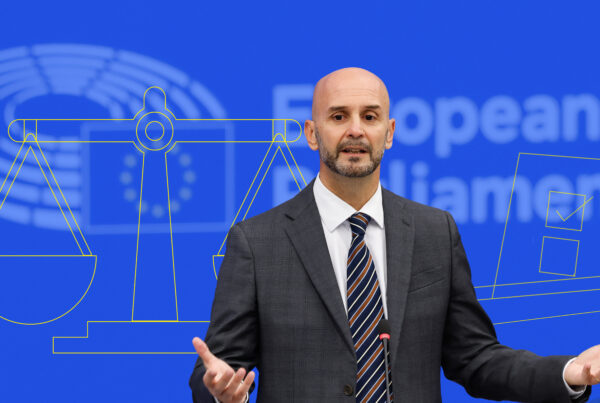


The debate over Europe’s next long-term budget must be about more than how much money Brussels can spend. For the ECR Group, the 2028–2034 Multiannual Financial Framework (MFF) needs clearer priorities, stronger scrutiny of expenditure and firm protection for cohesion, agriculture and Europe’s security.
Speaking in today’s European Parliament debate, ECR Budgets Coordinator Bogdan Rzońca said:
“We shouldn’t just talk about how much money the EU will have today, but also about how it’s going to spend that money. That’s the key issue, as are the priorities we have set.”
Rzońca also warned against imposing further costs on European citizens and businesses through climate legislation and new EU taxes:
“We have to stop the ETS and the Buildings Directive because European citizens can’t afford them. By bringing in new taxes, the EU is reducing the quality of life of its citizens. And that means that political extremes can feed off the EU. Only a sound political centre can lead the EU to success.”
He also stressed the need to safeguard the Common Agricultural Policy and cohesion funding in the next MFF:
“We have to maintain the CAP and cohesion policies. That will guarantee cohesion. And I hope that ministers at the next Council will not sacrifice regional policy, cohesion and the CAP at the altar of their own positions.”
For the ECR Group, the next MFF should reflect the profound changes in Europe’s security and economic environment. Resources should be concentrated where common European action brings genuine added value.
ECR Shadow Rapporteur on the MFF Roberts Zīle stressed that security and resilience also require solidarity with Member States facing the greatest external pressure, particularly along the EU’s eastern border.
“There was a great programme created by the European Commission for the eastern border countries that border Russia, Belarus and Ukraine. But there is no money in the next MFF for this programme, nor sufficient money for cohesion and agriculture to make these countries at least somewhat resilient against provocations carried out by Russia. Solidarity also has to be shown in money.”
Responding to a blue-card intervention from an EPP Member warning against cuts to military mobility, Zīle agreed that reducing funding in this area would send the wrong signal:
“Cuts to military mobility or Connecting Europe Facility funding would be totally the wrong direction. It would show our enemies how serious – or not serious – we are about military mobility.”
For the ECR Group, a credible long-term budget must therefore protect agriculture and cohesion, strengthen Europe’s external borders and security, and subject existing spending programmes to much more rigorous scrutiny. Greater transparency is also needed over where EU money goes, including funding for NGOs and lobbying activities.
The Group opposes creating new EU taxes that would place additional burdens on citizens and businesses. The priority should instead be to use existing resources more effectively and ensure that European spending produces measurable results.