
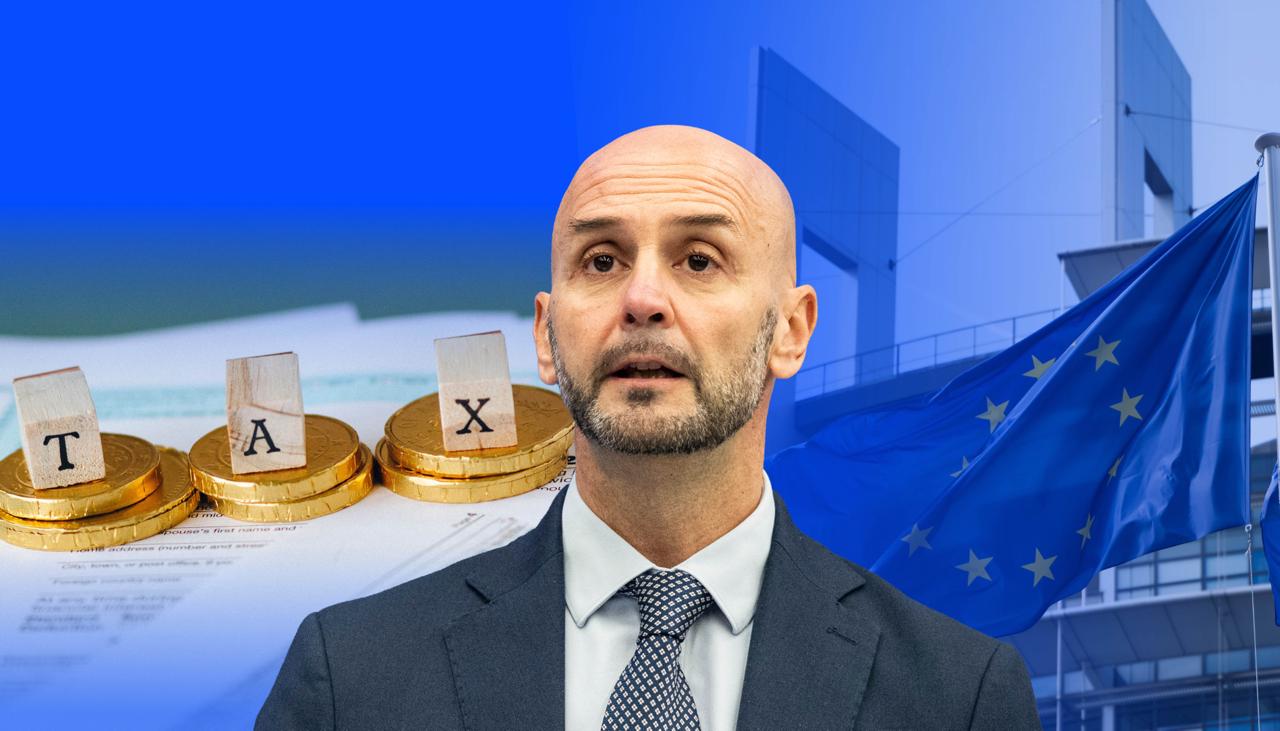
The European Union cannot claim to make its economy more competitive while at the same time increasing taxes and regulatory burdens on businesses and citizens, ECR Co-Chair Nicola Procaccini told the European Parliament during a debate on the EU’s next long-term budget .
With Budget Commissioner Piotr Serafin present, MEPs discussed the latest draft put forward by European Council President António Costa ahead of the special European Council on Thursday and Friday. Procaccini warned that the next Multiannual Financial Framework 2028-34 (MFF) must break with policies that have weakened European competitiveness rather than financing more of the same through new EU own resources.
“This debate comes just a few days after the failure of COP31 in Türkiye. That failure, in turn, confirms the failure of the Green Deal, that project of political engineering which is impoverishing the European economy without protecting the environment,” Procaccini said.
“While we continue to impose sacrifices on businesses and our citizens in the name of decarbonisation, deluding ourselves that we can determine the climate of planet Earth from the lofty height of our paltry 5 per cent of global emissions, the rest of the world continues to produce, grow and emit CO₂,” he added.
Procaccini said stronger competitiveness cannot be achieved simply by increasing public spending or creating new sources of taxation:
“History has taught us that it is the strength of the free market that generates innovation, prosperity and the resources for healthcare, education, security and the environment. Yet in this House, people continue to think that public spending does so — in other words, taxes.”
He appealed directly to the European People’s Party to work with conservatives on revising policies that are damaging European industry, including rules affecting the automotive sector and the EU Emissions Trading System.
“I want to make one final appeal to our friends in the European People’s Party: on the automotive sector and on the revision of the ETS, work with us! Leave the extremists to their generous but devastating utopias! We need realism. You cannot preach competitiveness while practising taxation. You cannot invoke subsidiarity while concentrating ever more power in Brussels,” he said.
Procaccini added that Europe was right to address the enormous profits generated in the European market by major American and Chinese technology companies, but cautioned against measures that would stifle innovation or penalise European businesses.
He concluded:
“The point is simple. We want a strong Europe, not an intrusive Europe. A Europe that produces and protects its own productive capacity, rather than entrusting it to China. A Europe that protects the environment together with the people who live in it.
“A Europe that does less, but does it better.”
—-
Mr Procaccini’s full speech reads:
Thank you, President.
This debate comes just a few days after the failure of COP31 in Türkiye. That failure, in turn, confirms the failure of the Green Deal, that project of political engineering which is impoverishing the European economy without protecting the environment.
While we continue to impose sacrifices on businesses and our citizens in the name of decarbonisation, deluding ourselves that we can determine the climate of planet Earth from the lofty height of our paltry 5 per cent of global emissions, the rest of the world continues to produce, grow and emit CO₂.
History has taught us that it is the strength of the free market that generates innovation, prosperity and the resources for healthcare, education, security and the environment. Yet in this House, people continue to think that public spending does so — in other words, taxes.
I want to make one final appeal to our friends in the European People’s Party: on the automotive sector and on the revision of the ETS, work with us. Leave the extremists to their generous but devastating utopias. We need realism! You cannot preach competitiveness while practising taxation. You cannot invoke subsidiarity while concentrating ever more power in Brussels.
I would add that it is right to address the issue of the web giants, especially American and Chinese companies, which generate enormous profits in our market. But we must do so without stifling innovation and without penalising European businesses.
The point is simple: We want a strong Europe, not an intrusive Europe. A Europe that produces and protects its own productive capacity, rather than entrusting it to China. A Europe that protects the environment together with the people who live in it.
A Europe that does less, but does it better.